
As a seasoned conference presenter and exhibitor, I always joke that the lull between conference sessions is “introvert hour” when people can engage with booths and vendors at their own pace. I’ve always enjoyed these periods and found them to be when I often have the most fruitful conversations. During one such lull at the Best of Out-Of-School Time (BOOST) conference in 2023, I found myself excitedly connecting with someone over bug collection and community science. Speed ahead past a handful of subsequent planning conversations, and that initial conversation eventually yielded a state-wide, high-impact partnership between the California Academy of Sciences’ Science Action Club (SAC) program and Think Together, a California-based nonprofit, to bring nature engagement to their expanded learning programs across California.
 Designed in 2011 for middle school youth in out-of-school time (OST), SAC kits feature games, projects, and hands-on investigations that inspire wonder for the natural world. To date, SAC has engaged over 4,500 clubs from New York to Alaska and California, and even as far as Spain. In our 13th year, we have built our largest footprint yet with over 820 clubs internationally and a pipeline of 430 clubs for next year.
 Think Together’s mission is to partner with schools to change the odds for kids, and they currently serve 200,000 youth from San Diego to the Bay Area.
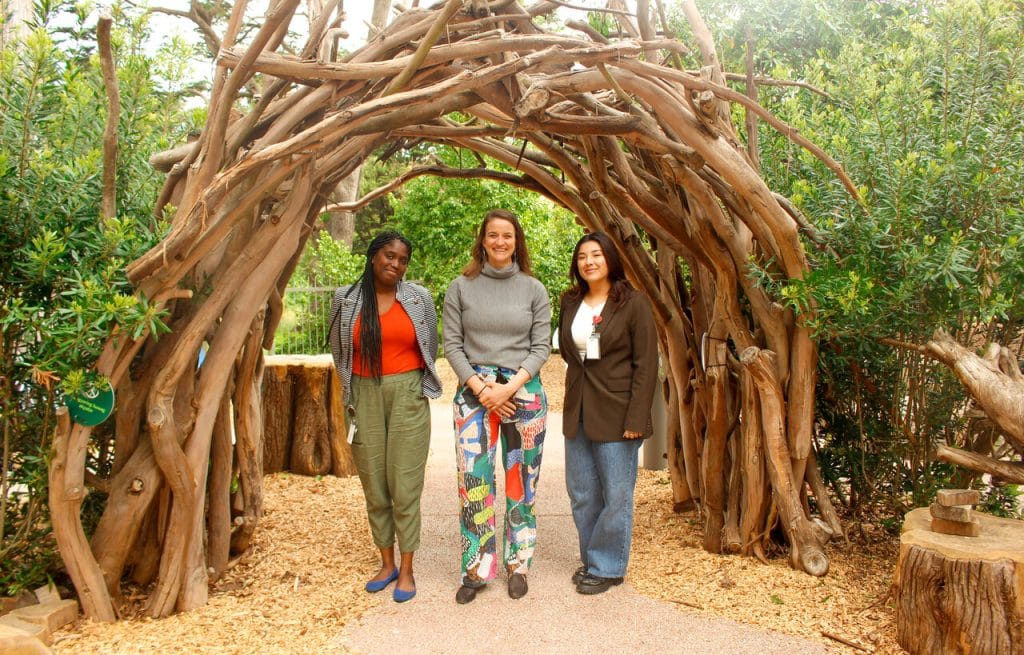
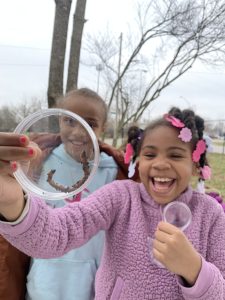
This partnership landed me in the most successful year of my career growing the program to the widest geographic footprint it’s seen in 13 years. I can’t help but feel grateful and reflective to the ways I’ve grown alongside SAC. I wanted to share a few things I’ve learned in this partnership arc.
First, make your expertise welcoming. Since we don’t know the walls people perceive that impact their ability to lead and engage with science and nature, one invitation could be the way to break down barriers and mirror your expertise in others. We encourage youth to be anything—while often limiting ourselves, but even adults must continue to nurture and share expertise. Thinking back to my experience in the BOOST exhibit hall in 2023, I was sharing how to use a “pooter” for bug observation with visitors. This eclectic collection technique was a bridge to insects, community science, and the (often) intimidating world of science.
Lastly, find the “pockets of YES!” that not only align with your work and mission, but also with what gets you excited. If we are doing the work, let us be thrilled to work through the hard moments to see the rewards. When we found mission alignment with Think Together, I found my “pockets of YES!” to bring SAC to all their sites, not just a few, and another to use our bilingual resources, to invite all learners into the project.
The post Partnering and Scaling while Staying True to Your Mission: Science Action Club Program Profile appeared first on Association of Science and Technology Centers.